

What Co‑Regulation means for parents.
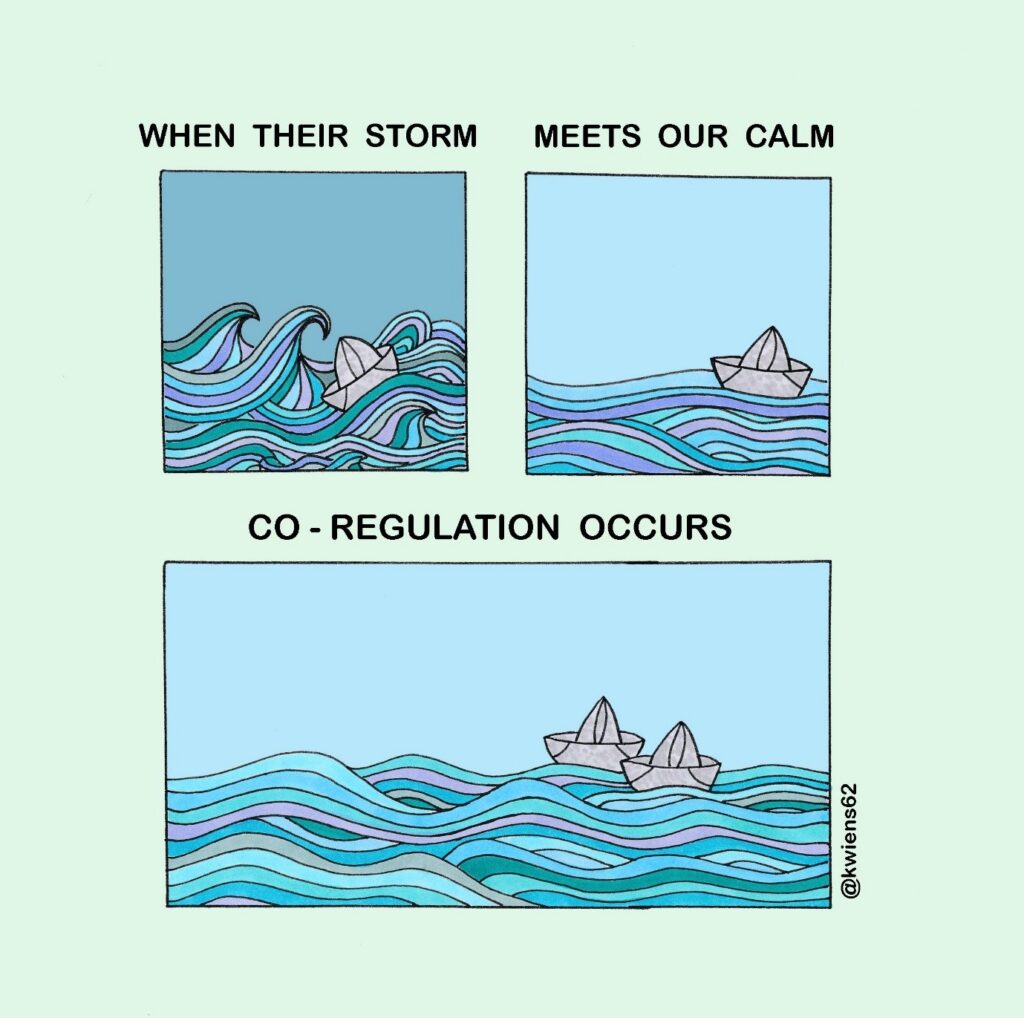
Co‑regulation is when your calm helps your child become calm. You lend your steady nervous system to them when their feelings or sensory input feel “too big.”
For autistic or ADHD children, this is especially important because their bodies can get overwhelmed more quickly. Your calm presence helps them feel safe, especially at times of sensory overload, transitions, uncertainty, or social demands.
This can be a tough ask for busy parents who are juggling many balls at one time. It’s completely normal to find it hard to stay calm when your child is overwhelmed — your nervous system reacts to their distress because you care. Staying steady is a skill, not a personality trait, and it grows with support. Small things help: taking slow breaths, stepping away for a moment if it’s safe, having a support system you can lean on, and making sure you get your own rest, breaks, and nourishment. Caring for yourself isn’t selfish — it’s what allows you to co‑regulate your child when they need you most.
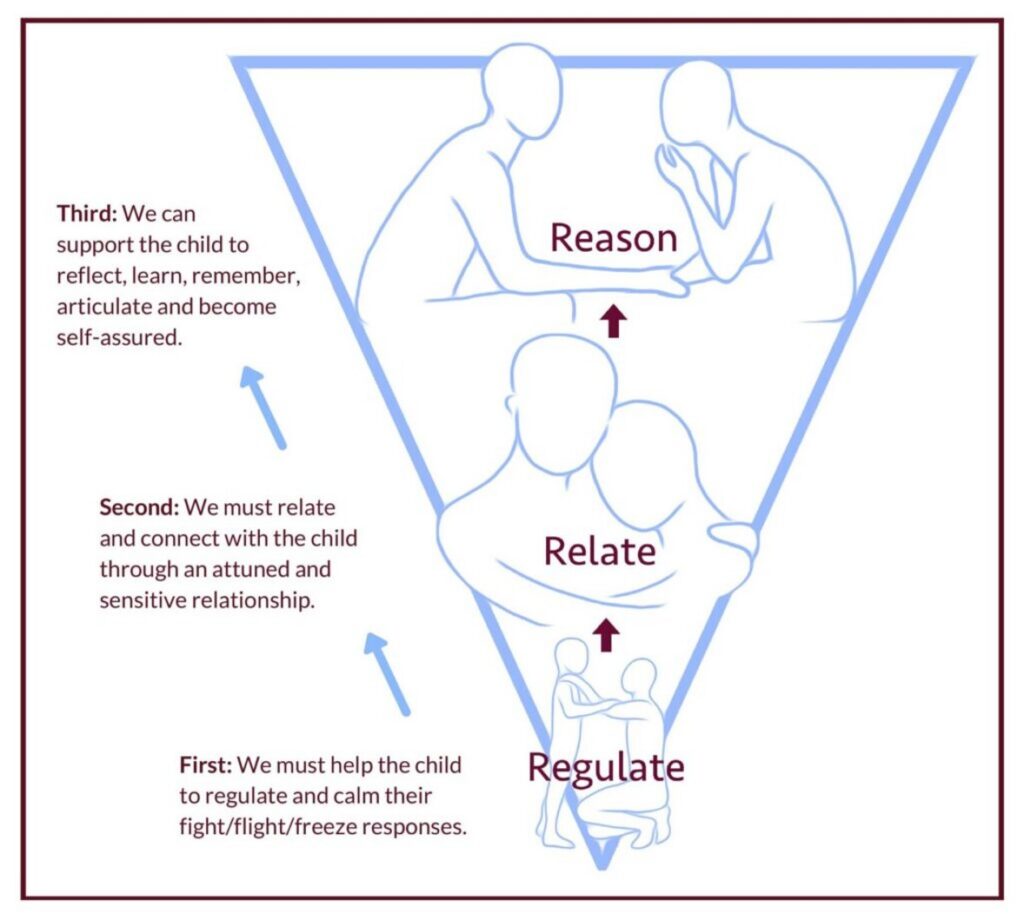
Bruce Perry’s 3 R’s
Bruce Perry is a child psychiatrist who studies how children’s brains grow and how stress affects them. He created the 3 R’s—Regulate, Relate, Reason—to help adults support children during overwhelm. His work is widely used to guide trauma‑informed and neurodiversity‑affirming practice.
Regulate
A child can’t listen, talk, or problem‑solve when their body is overwhelmed. They need help calming their nervous system—the ‘Regulate’ step must come first.
Help the child’s body and nervous system settle first. Neurodivergent children often need sensory‑based regulation before anything else.
Helpful regulating strategies:
- Heavy work (pushing, carrying, wall‑pushes)
- Movement breaks (trampoline, scooter, garden run)
- Calming sensory input (dim lights, weighted lap pad, soft music)
- Short, gentle phrases: “I’m here,” “You’re safe.”
- Predictable routines (no surprise change of plans)
Relate
Once their body is calmer, connection helps their emotions settle. ‘Relate’ is step 2.
Ways to relate:
- Sit close and breathe slowly
- Use noticing language: “Your body looks tired.”
- Validate: “That felt big.”
- Quiet, low‑demand time together (snack, drawing, soft play)
Connection produces oxytocin, which helps calm the nervous system.
Reason
Talk and problem‑solve later. Only when your child is fully calm and connected can they think clearly. Step 3 ‘Reason’ is last—and may happen hours later or even the next day.
Ways to reason:
- Use visuals (feelings chart, simple drawings)
- Ask simple reflection questions: “What helped your body?”
- Plan together: “Next time, what could we try?”
When your child is in an emotional “storm,” your calm is what helps their body settle. The 3 R’s remind us that if we meet their storm with our own storm, everyone becomes more distressed. But when we can meet their storm with our calm, even in small ways, we give their nervous system something steady to match — and that’s when co‑regulation happens.
Why Co‑regulation helps
It supports:
- fewer meltdowns or shutdowns
- smoother transitions (like after school)
- stronger connection with parent/caregiver
- better emotional safety
- readiness for learning and communication
It focuses on supporting the nervous system, not “fixing behaviour.”
A simple after‑school example
Regulate: Offer a snack, dim lights, quiet corner, or movement break. “Let’s sit together while your body settles.”
Relate: “I can see today took a lot out of you. I’m right here.” Sit close, keep your tone soft.
Reason: Later, when calm: “Let’s think about what helped your body today. What should we try tomorrow?”
***
Every child experiences and responds to the world differently. For some families, learning more about concepts such as co-regulation can provide helpful insight into their child’s needs and ways of supporting them. If you have questions about your child’s communication, social interaction, sensory experiences, or emotional regulation, a comprehensive autism assessment can help build a clearer understanding of their strengths, differences, and support needs. Our multidisciplinary team is here to guide you through the process and answer any questions you may have along the way, learn more about our Private Autism Assessment service.