


Every child develops in their own unique way. However, as a parent, you may notice differences in your child’s sensory preferences or the way they communicate, play or interact. These differences may indicate autism but not always. Either way, they can be something to explore to help you understand your child better.
In this blog, we’ll explore some of the autistic traits or characteristics that may emerge between the ages of 0 and 5. We’ll also look at what to do if you have questions you would like answered.
Signs of autism in speech and language development
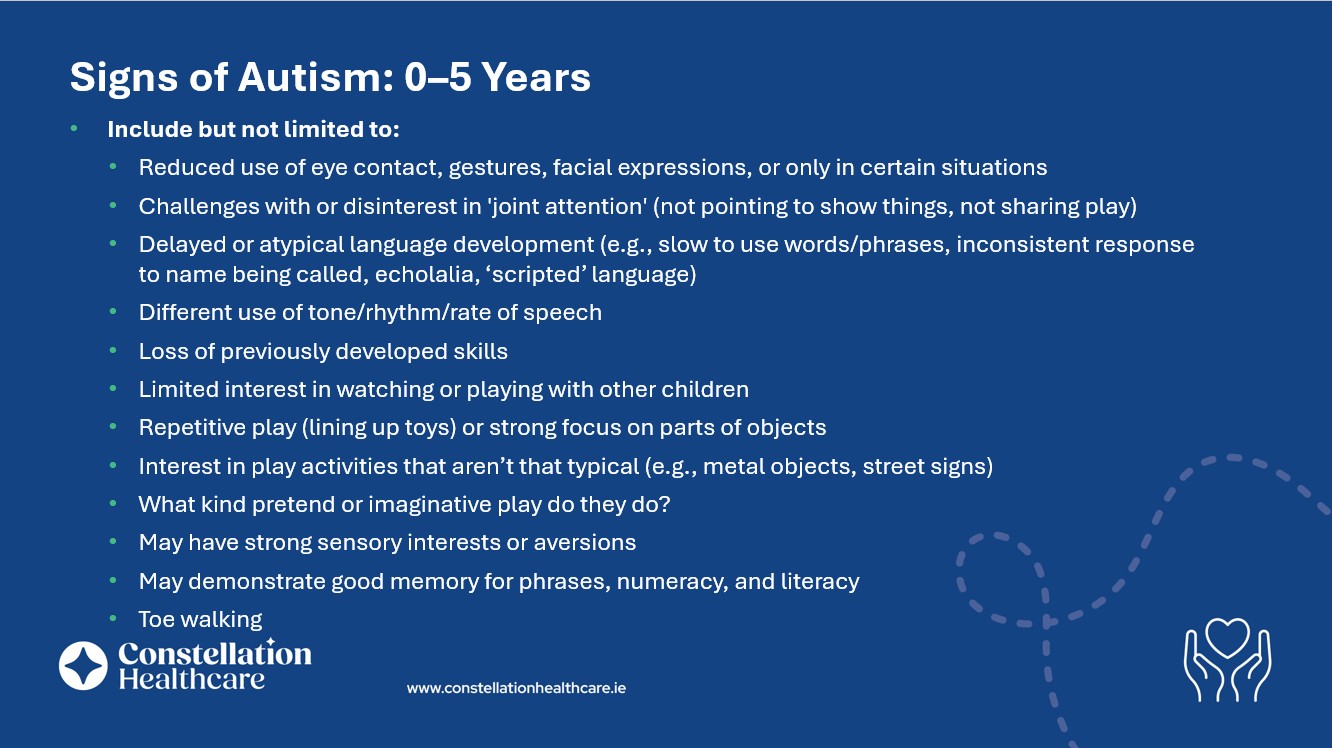
Children will tend to start to use single words before the age of two. Around 33 months (two years and nine months old), they start to use phrases. Autistic children may develop later or they may develop differently. For example, they may not always respond when their name is being called. They may find it difficult to use language in the right context or struggle with the tone and rhythm of language.
Children use echolalia when they start to speak – it’s repeating words and phrases you’ve heard other people use. Autistic children tend to use echolalia as a communication strategy for longer . They will slot certain words or phrases into the conversations they have, even when they don’t quite fit.
Signs of autism in social communication development
Some autistic children may struggle with eye contact, gestures and facial expressions. In particular, they may find it tricky to combine all three elements. They may not be interested in ‘joint attention’ or find it challenging to share activities with other people. This might include not pointing at things they find interesting or not wanting to share play.
They may also have limited interest in watching other children play or playing with other children.
Signs of autism in play
Play is an important part of social communication development, and there are traits that autistic children may display when playing. For example, they may favour repetitive play (such as lining up toys) or have a strong focus on certain parts of objects. They may also be interested in playing with objects that aren’t typically play-based.
Imaginative play is also an area to look at. Autistic children may have a strong sense of how they want play to go or what they want to do with their play. This may mean they are happy to play alone and find it challenging when other people join in or give ideas
Other signs of Autism
Autistic children may have very strong sensory interests and fixate on certain objects or sounds. They may also have very strong sensory aversions or amplified sensory responses. For example, an autistic child might find the taste of toothpaste overwhelming, which may make teeth brushing unpleasant.
They may continue to toe walk (that is, walking with their weight on the balls of their feet) for longer than neurotypical children.
They may lose skills they have previously developed.
They may demonstrate a good memory for phrases or have very good numeracy and literacy skills
When to consider an autism assessment
When thinking about all these signs, it is important to remember that autism is a spectrum. While many autistic people share these traits, every child’s experience is unique.
To understand if you are seeing signs of autism, it can be helpful to think about how long they’ve been happening. Typically, if you’ve noticed something going on for three months or more, it’s something to investigate further. Think too about the quality of the behaviour – does something happen always or only sometimes? Have you needed to adapt routines and activities for your child?
As a parent, you know your child better than anyone. If you have concerns about how your child is coping with the world around them, a diagnosis of autism is something to consider.
In Ireland, you can ask for an autism assessment for your child. This can be an HSE autism assessment [ through the Assessment of Need process] or it may be a private assessment for autism with a provider such as Constellation.
To hear our Psychologist Dr Eóin Rickard discuss the signs of autism in children from 0 to 5 in more detail, watch our webinar Recognising Early Signs of Autism: A Parent’s Guide to Navigating Next Steps
Autism assessments at Constellation Healthcare
Constellation Healthcare offers a pathway of support that puts children and families first – helping every child to thrive.
At Constellation Healthcare, from our clinic in Dublin, every autism assessment is tailored to your child – their comfort, needs and communication style. The aim is to ensure we build the fullest picture of who they are and what they need to thrive. You can find out more about what’s involved at What happens in an Autism Assessment? A guide for parents in Ireland. Following the assessment, you will receive a clear, comprehensive HSE‑recognised report.
Whether an autism diagnosis is clinically indicated or not, our report will give you clear, tailored recommendations for follow‑up supports that will help you and your child. (You can find out more at Understanding your Child’s Autism Assessment report, and what happens next.)
The assessment will help you understand your child better, give you clarity and enable you to support them with greater confidence.